 (Image source: Gemini)
 Most of us treat our cars like household appliances. We expect them to work every time we turn the key, yet we rarely give them the attention they deserve until something goes wrong. It's a reactive cycle that usually ends with a massive repair bill and a stressful afternoon waiting for a tow truck. As we handle 2026, the stakes for vehicle care are higher than ever. The average age of cars on the road has climbed to over 12 years.² This means you aren't just maintaining a machine, you're managing an aging asset that's packed with more complex electronics than the Apollo moon lander.
The shift from reactive fixing to proactive prevention is the only way to keep your sanity and your savings account intact. Think of it like a gym membership for your car. You pay a little bit regularly to avoid a catastrophic health crisis later. It extends the life of your vehicle and keeps your resale value from plummeting when you're finally ready to trade it in.
So what does this actually mean for your daily routine? It means moving past the mindset of waiting for a light to pop up on the dash. By the time that light is blinking, the damage is often already done.
Fluids and Filters
If you want to keep your engine from turning into an expensive paperweight, you have to talk about fluids. Specifically, you have to talk about oil. It's the single most important maintenance task you can perform.
Modern turbocharged engines are common in 2026, and they're incredibly sensitive to oil quality. Skipping even one service can lead to coking, which is basically the oil baking into a solid crust inside your engine. This is a leading cause of engine failure today. Stick to the manufacturer intervals, which usually land between 5,000 and 7,500 miles for synthetic oil.
But engine oil isn't the only fluid doing the heavy lifting. You've got a whole ecosystem of liquids under the hood
- Coolant: This prevents your engine from melting. Cooling system failures account for 11% of all breakdowns. A flush every 30,000 miles is cheap compared to a thousand-dollar water pump replacement.
- Brake Fluid: This stuff is hygroscopic, which is a fancy way of saying it sucks up moisture from the air. That moisture can corrode your ABS system and make your brakes feel like mush.
- Transmission Fluid: If you're driving a gas or hybrid vehicle, don't believe the "lifetime fluid" myths. A service every 30,000 miles can prevent a transmission rebuild that could cost you upwards of $7,000.
Don't forget the filters. Your engine air filter is the lungs of your car. If it's clogged, your fuel efficiency drops and your engine works harder than it needs to. Your cabin filter doesn't affect the engine, but it's the difference between breathing fresh air and smelling the exhaust of the truck in front of you.
Tire Health
It's easy to forget that only four small patches of rubber connect your two-ton vehicle to the pavement. When those patches fail, nothing else matters. Tire maintenance is about safety as much as it is about saving money.
Regular rotation is the secret to making a set of tires last. If you don't rotate them every 5,000 to 8,000 miles, the front tires will wear out significantly faster than the rears. You'll end up replacing two tires at a time, which is never ideal for handling or your wallet.
You should also be checking your tread depth regularly. A good rule of thumb is to maintain at least 4/32 of an inch of tread. Anything less and you're ice skating when the roads get wet. Poor tire maintenance contributes to tens of thousands of crashes every year.
Keep an eye on wear patterns too. Are the insides of your tires wearing faster than the outsides? That's your car's way of telling you the alignment is off. Ignoring this doesn't just ruin the tires. It puts extra stress on your suspension components. It's a domino effect that you really want to avoid.
Identifying Warning Signs
Your car is constantly talking to you. The problem is that most people have learned to tune it out. You don't need to be a certified master technician to notice when something feels "off."
Dashboard lights are the obvious signs, but they're often the final warning. You should be paying attention to the sounds your car makes. A high-pitched squeal when you start the engine usually points to a worn belt. A grinding noise when you hit the brakes means your pads are gone and you're now eating into the metal rotors.
Pay attention to how the car behaves through your hands and feet. Does the steering wheel vibrate at highway speeds? That's likely a wheel balance issue. Does the brake pedal feel spongy? You might have air in your lines or a leak.
In 2026, we also have to deal with Advanced Driver Assistance Systems (ADAS). If your car starts drifting out of lanes or the automatic braking feels twitchy, it might need recalibration. This is especially true if you've recently replaced a windshield or had an alignment done.¹ It's the digital equivalent of making sure your car's "eyes" are focused correctly.
Adhering to Manufacturer Schedules vs Independent Advice
There's a lot of noise out there about how often you should service your car. Your local quick-lube shop wants you there every 3,000 miles. Your neighbor says you can go 15,000. Who do you trust?
The answer is in your glovebox. The owner's manual is the definitive guide for your specific vehicle. The engineers who designed the engine wrote that book. They know exactly what it needs to survive.
But you need to be honest about your driving habits. Most manuals have two schedules: "Normal" and "Severe." If you live in a city with stop-and-go traffic, or if you live somewhere with extreme heat or freezing winters, you're a severe driver. This means you need to follow the more frequent service intervals.
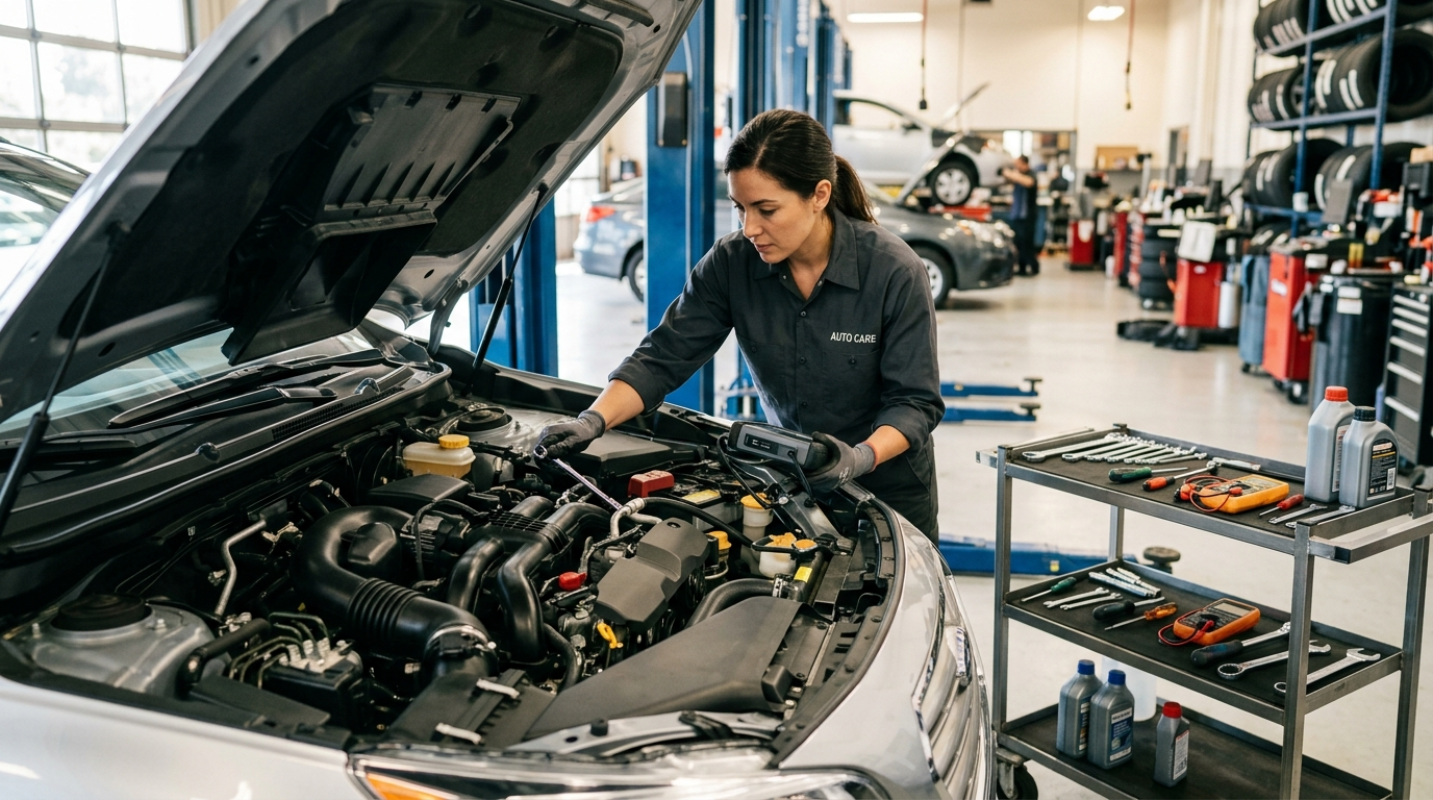
Building a relationship with a trusted mechanic is also key. In an era of technician shortages, having a pro who knows your car's history is invaluable. They can spot a leaking seal or a cracked bushing during a routine oil change before it leaves you stranded. For those looking to get serious about their vehicle's longevity, these tools and brands are the gold standard for 2026.
- FIXD OBD-II Scanner: A simple plug-in tool that talks to your car and tells you exactly why that light is on before you head to the shop.³
- CarFAX Car Care App: This is a great way to digitalize your service history so you never forget when your last oil change was.³
- Hybrids: If you're looking for a new vehicle, hybrids are currently the most reliable powertrain on the market, beating out both traditional gas engines and EVs.⁴
Investing in Reliability
At the end of the day, maintenance is an investment. The average annual cost to keep a car running is around $1,234.² That might seem like a lot, but compare it to the "neglect multiplier." A $100 oil change is a bargain compared to a $5,000 engine replacement. A $150 transmission service is much easier to swallow than a $4,000 bill for a new gearbox.
There's also the psychological cost of a breakdown. There's no price tag on the peace of mind that comes with knowing your car will start on a freezing Monday morning. It's about safety for you and your family.
Start by checking your tire pressure today. Then, go find that owner's manual and see what's coming up on the schedule. Your car - and your bank account - will thank you for it.